How to choose an espresso grinder for home
A grinder listing can be difficult to compare when one brand advertises burrs, another lists adjustment steps, and a third emphasizes dosing. Start with what the grinder must do in your routine, then compare the evidence each maker publishes.
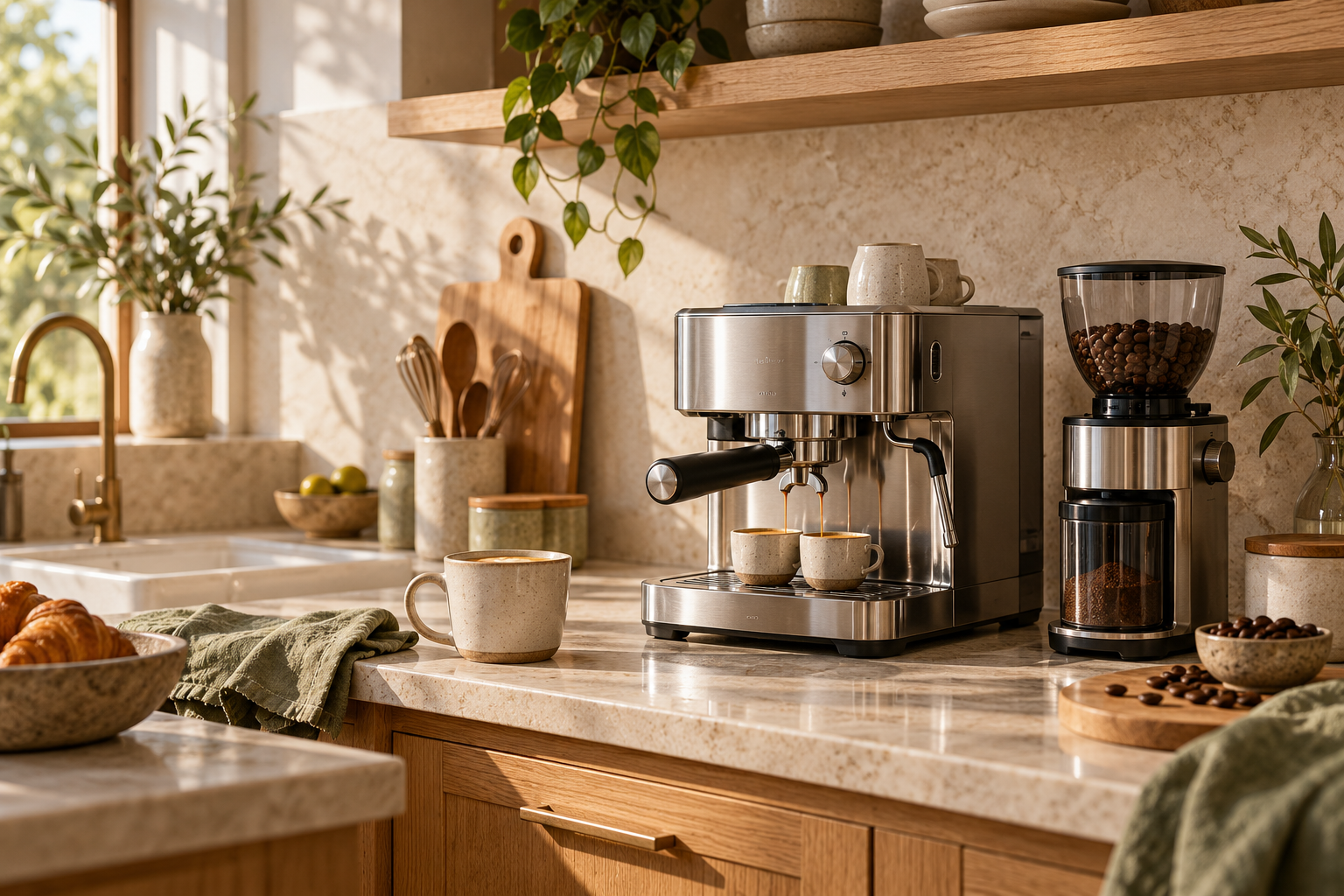
1. Confirm espresso use and adjustment
Espresso depends on changing grind size in small increments as you dial in a coffee. Read the maker’s product page and manual for the intended brew methods, adjustment mechanism, and espresso range. “Grind size settings” is useful only when you know how each setting changes the result and whether steps are small enough for your machine and basket.
As one concrete example, Baratza describes the Encore ESP as having a dedicated espresso adjustment range. That describes the named model; do not assume every grinder in the same price class or from the same brand has the same behavior.
2. Choose the dosing routine
| Workflow | What to compare | Question for your routine |
|---|---|---|
| Hopper and timed dose | Hopper size, timer controls, whether you can change dose easily, and cleanup around the chute. | Do you usually use one bean and make several drinks in a row? |
| Single dose | How beans are weighed, how the grinder handles a single portion, and where grounds collect. | Do you frequently change coffee or want to weigh each dose? |
| Grind by weight | What the scale measures, claimed dose tolerance, calibration, and how changes are made. | Would weighing beans yourself be more convenient than setting a timer? |
These are different workflows, not a quality ranking. Read owner discussions as examples of preferences, not proof that one dosing style always produces better espresso.
3. Check support and care before buying
Look for a manual that explains safe cleaning, burr access, adjustment, and replacement parts. Check the seller’s return terms and the manufacturer’s warranty for your country. A grinder that is easy to clean and supported locally may suit you better than a feature-rich option with an unclear service route.
Measure the grinder with its hopper or bellows fitted and allow room to open or remove the part you need for cleaning. Consider whether the grinder’s noise and footprint are acceptable where and when you make coffee.
4. Compare the full espresso setup
If your espresso machine has no grinder, compare the cost of the two items together. Include shipping and tax, and check whether a bundle names the exact grinder model. If you might brew filter coffee too, confirm that the grinder manufacturer supports those settings and that switching between them is practical for you.
Do not spend the whole budget on grinder features while overlooking the machine, scale, coffee, and accessories. The useful question is whether the total setup fits your budget and the space you measured.
Before you order
- Find the exact grinder model and version.
- Confirm the maker supports espresso grinding.
- Read how adjustments and dosing work; do not rely on a setting-number count alone.
- Check cleaning instructions, parts, support, noise, and dimensions.
- Compare complete machine-plus-grinder cost with shipping and tax.
Our integrated vs separate grinder guide helps decide whether you want a separate grinder at all.
Sources and limits
See Baratza’s espresso dialing guide for its explanation of grinder adjustments and model-specific ESP examples, and consult the manual for the exact grinder you choose.
No grinder has been tested or ranked by us. We do not claim a price or search-volume advantage. No affiliate links or sponsored placements are used.